
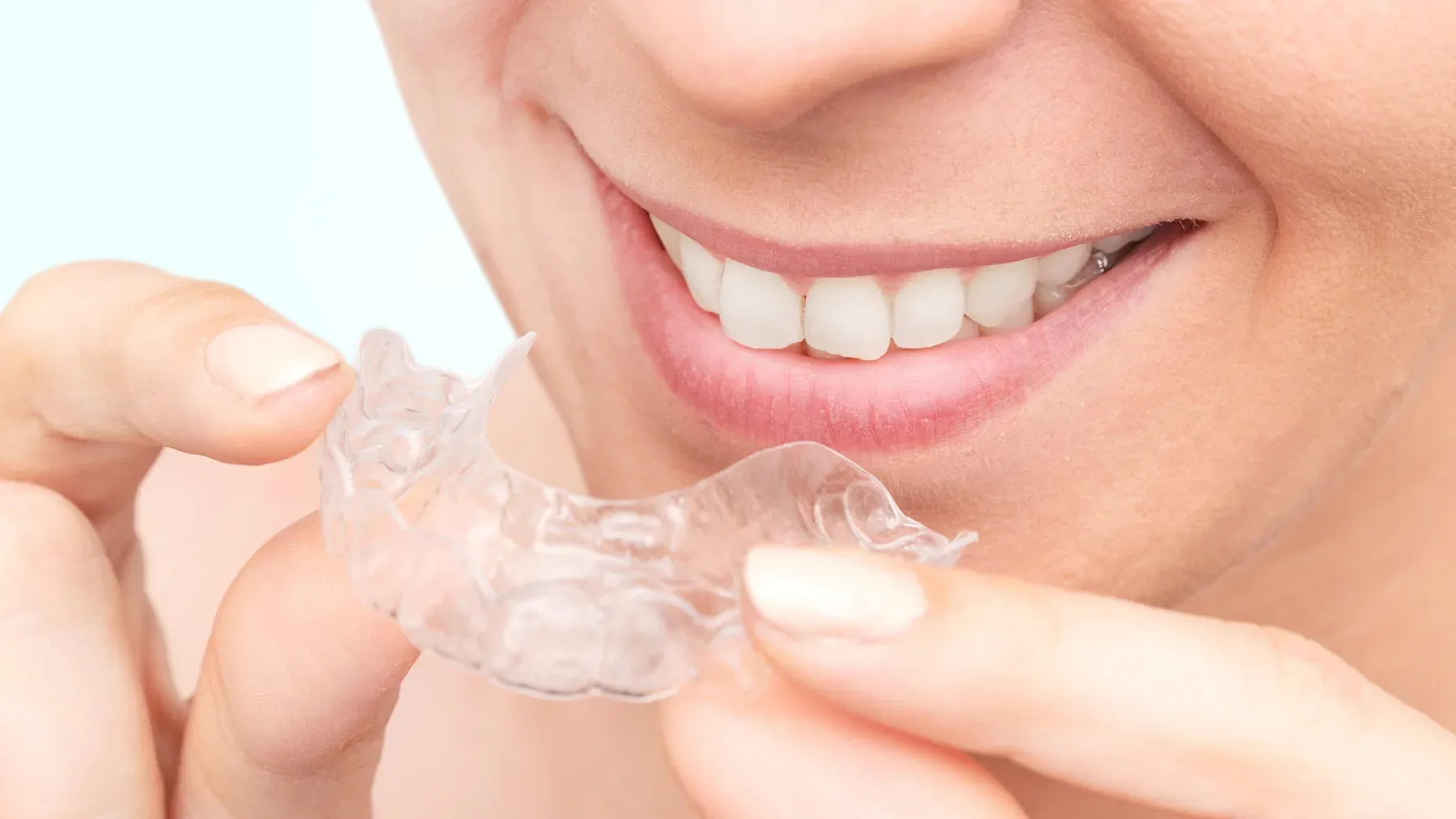
Bruxism is the habit of grinding or clenching your teeth, and most of it happens while you are asleep and unaware of it. The forces involved are far higher than normal chewing, and they act on the same few contact points hour after hour. A nightguard is a thin, custom-fitted appliance worn over one arch that absorbs those forces before your teeth do.
Why grinding usually goes unnoticed
Clenching during sleep happens below conscious awareness, so people rarely wake up knowing they did it. Often the first person to notice is a partner who hears the sound, or a dentist who spots flattened chewing surfaces that do not match your age. Daytime clenching is a little easier to catch: many people find themselves holding their teeth together while concentrating, driving, or lifting something heavy. Stress, certain medications, and an uneven bite can all play a part, and often more than one factor is involved.
Clues that show up on your teeth and jaw
Bruxism leaves a fairly recognizable pattern. If several of these sound familiar, it is worth mentioning at your next checkup.
- Front teeth that have flattened or shortened over the years
- Tiny chips along the biting edges
- A dull ache in the jaw or temples on waking
- Headaches that start at the sides of the head
- Teeth that feel sensitive without any decay present
- Notches worn into the tooth near the gumline
What the appliance actually does
A nightguard does not stop the clenching habit itself. What it does is separate the upper and lower teeth with a hard, smooth surface, so the load spreads out and lands on the appliance rather than on enamel, existing dental work, or the joint. Many people notice their jaw muscles feel less tight in the morning once they get used to wearing one, and when jaw pain or clicking is the main complaint, the appliance becomes part of TMJ treatment. If you have invested in crowns or veneers, protecting them overnight is one of the more practical things you can do.
Getting one made for your mouth
Fit is the whole point. Dr. Beaty checks how your teeth come together and where the wear is concentrated, then takes a digital scan of your teeth so the appliance can be built to your exact contours. Because the scan is taken by camera, there is no tray of impression material to sit through. When the finished guard comes back, we try it in, adjust the contact points so the bite feels even, and make sure it stays put without pressing anywhere. Boil-and-bite guards from a drugstore are thicker, looser, and tend to end up in a drawer.
Getting used to it, and looking after it
The first few nights feel odd for almost everyone; most people settle in within a week or two. Rinse the guard and brush it with a soft brush after each use, let it air dry fully, and keep it in its case rather than loose where a pet might find it. Bring it along to checkups so we can inspect it for wear and confirm it still fits, since the appliance itself gradually thins in the spots taking the most force.
When grinding is a signal rather than a habit
Not all bruxism is stress-related. Nighttime grinding sometimes accompanies sleep-disordered breathing, in which case an appliance protects the teeth but leaves the underlying breathing problem untouched. If your grinding comes alongside loud snoring, gasping, or waking unrefreshed no matter how long you slept, say so, because that combination changes what should be looked at first.
Repairing wear that has already happened
If years of grinding have already shortened or chipped teeth, a guard prevents further damage but will not rebuild what is gone. Depending on how much structure has been lost, options range from conservative bonding to crowns that restore the original height and shape. It usually makes sense to get the grinding under control first, so that any new dental work is protected from the same forces.
Common questions about custom nightguards
How do I know if I grind my teeth at night?
Most people find out from a partner who hears it, or from a dentist who notices flattened, chipped, or unevenly worn teeth. Waking with a tight jaw, sore temples, or a headache that fades through the morning is another common sign. If any of that sounds familiar, mention it at your next visit so your wear pattern can be checked.
Is a custom nightguard better than one from the drugstore?
A store-bought guard is molded roughly by biting into softened plastic, so it tends to be bulky and can shift while you sleep. A custom guard is made from a scan of your teeth, fits closely without pressure, and is adjusted so your bite meets it evenly. Comfort matters, because a guard only helps on the nights you actually wear it.
How long does a nightguard last?
That depends heavily on how forcefully you grind. Some guards stay in good shape for several years, while heavy grinders wear through one considerably faster. Bringing it to your checkups lets us watch for thinning, cracks, or a fit that has loosened as teeth shift slightly over time, and replace it before it stops protecting properly.
Will a nightguard help my jaw pain?
Many people report less morning jaw tightness once they wear one consistently, since the muscles are no longer loading against enamel all night. Jaw pain can also come from the joint itself, arthritis, or habits during the day, so it is not a guaranteed fix. Dr. Beaty can examine the joint and muscles to see whether a guard is the right starting point.
